Old-school pingers send your URL to a list of services and hope for the best. Bulk URL Indexer Tool is a modern ping indexer that pushes every URL through 17 indexing engines at the same time, so new pages and fresh backlinks get discovered faster.
A ping indexer is an online ping tool for SEO that notifies search engines and update services when a URL is published or changed. The ping acts as a signal that says “this page exists, come and crawl it.” Instead of waiting for crawlers to find a page through links, you tell them directly.
When you ping search engines, you shorten the gap between publishing and discovery. That matters most for new websites, deep pages with few internal links, and backlinks sitting on other people’s domains.
Yes, but the methods have changed. In 2023, Google retired its sitemap ping endpoint, so tools that still rely on that are pinging into the void. Pinging today works through live channels: the IndexNow protocol used by Bing, Yandex, Naver, Seznam, and Yep, plus blog update services and other discovery signals.
A ping indexer that combines many live channels gives each URL more chances to be found than any single pinger can.
Paste or upload hundreds of URLs and ping them in one batch. It replaces old one-link-at-a-time forms.
Send every URL through 17 indexing engines simultaneously for broader discovery coverage automatically.
Spread pings over several days instead of firing everything at once. Great for larger campaigns.
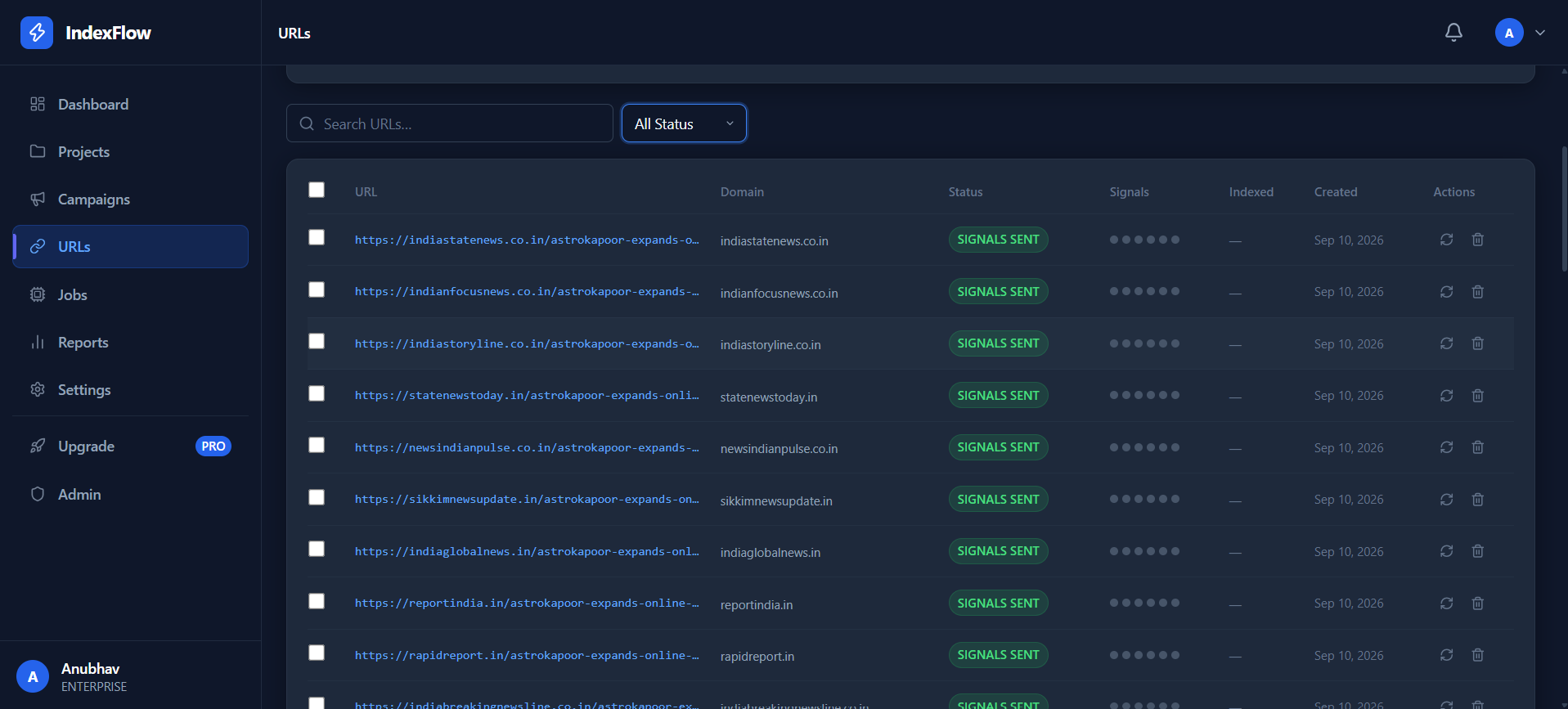
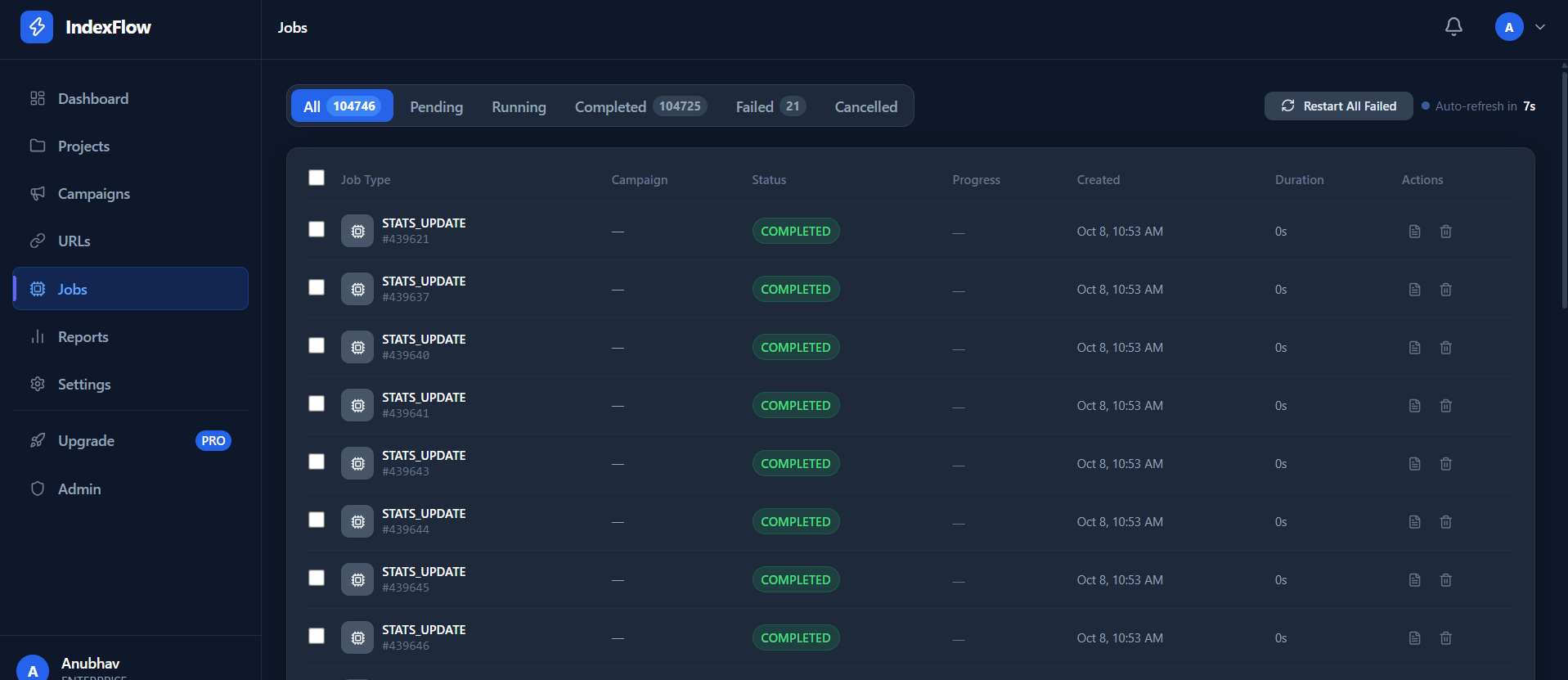
Follow the status of every URL from submission to completion instead of only seeing “Ping sent”.
A backlink passes no value until the page it sits on is indexed. Guest posts, directory listings, citations, and profile links often sit unnoticed for weeks. When you ping backlinks, you push those pages in front of crawlers sooner.
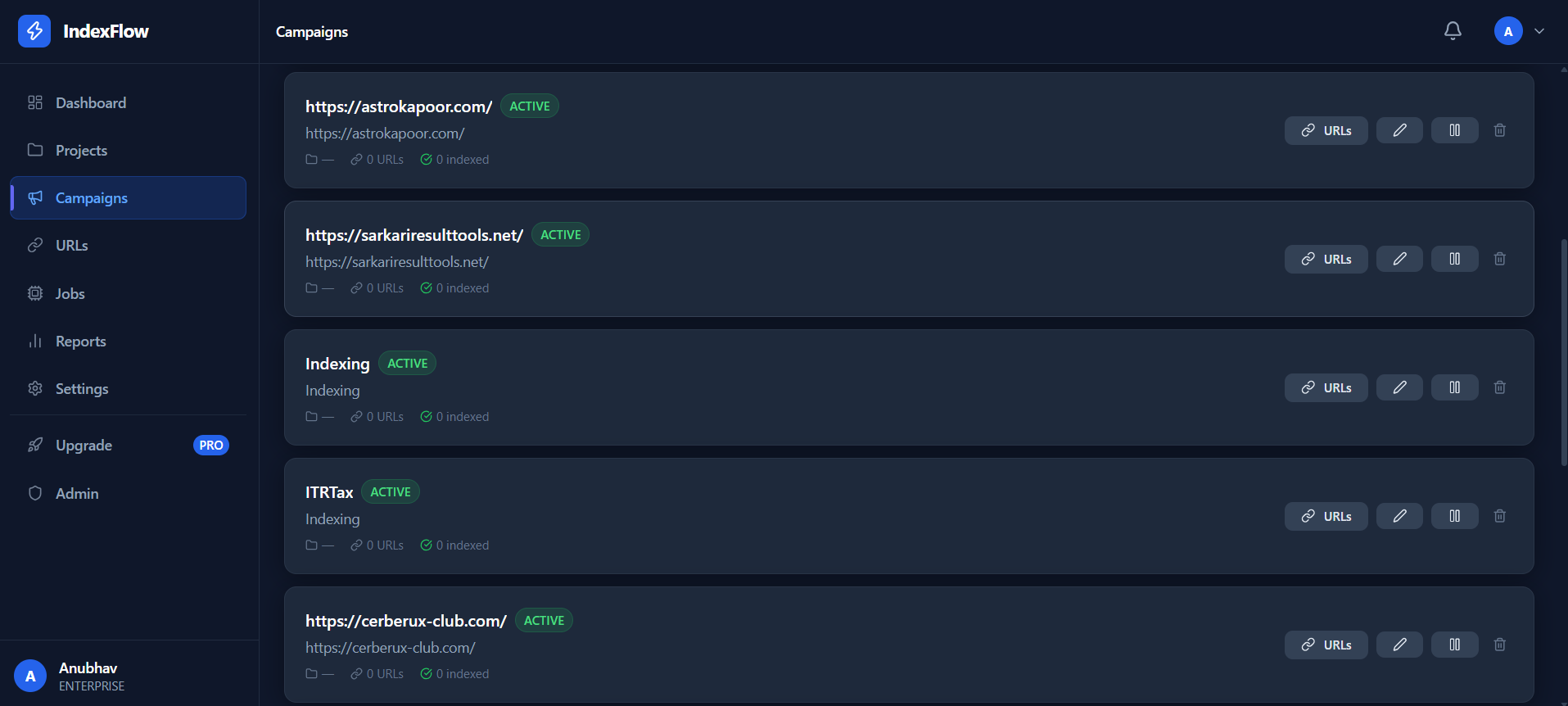
Our url pinging tool for backlinks works on any domain, including third-party sites where you have no Search Console access. Group links by client or order into campaigns, ping backlinks in bulk, and track the result of each one.
To ping sitemap to search engines today, submit the sitemap in Google Search Console and Bing Webmaster Tools, then ping the individual URLs inside it. Our tool handles the second step in bulk, so every new page in the sitemap gets its own signal.
Many site owners want to ping a website to Google with one click, but Google no longer accepts direct sitemap pings. The best approach is to combine a clean sitemap with multi-engine pinging and strong internal links — exactly what this workflow supports.
On Pro and Enterprise, API access and webhooks let you ping new blog posts automatically the moment they go live.
Sign up in under a minute, no credit card needed.
Paste pages or backlinks, then choose instant pinging or a drip-feed schedule.
Watch each URL’s progress in real time from your dashboard.
See how a modern multi-engine workflow compares with older single-purpose ping forms.
| Feature | Bulk URL Indexer Tool | Legacy URL Pingers |
|---|---|---|
| Channels | 17 indexing engines | Fixed list of ping services, many inactive |
| Google sitemap ping | Not relied on (retired by Google in 2023) | Often still used |
| Bulk submission | Hundreds of URLs per batch | Usually one URL per form |
| Backlinks on other sites | Yes | Limited |
| Drip feed | Yes (paid plans) | Rarely |
| Tracking | Real-time, per URL | “Ping sent” message only |
| Automation | API and webhooks (Pro and Enterprise) | Rarely |
Our Free plan lets you bulk ping URLs online free: 10 URLs a day across 3 engines, with tracking included. When you need more, paid plans scale from 100 to 600 URLs a day, with all 17 engines on Pro and Enterprise. Yearly billing saves 5% on every paid plan.
Stop sending pings to services that stopped listening years ago. Use a ping URL tool built for how search engines discover content in 2026.
